Several sapphires have achieved fame throughout history due to their size, beauty, and historical significance:
The Star of India
The Star of India is a huge blue star sapphire weighing 563.35 carats. Its history is unknown, but it is believed to have originated from Sri Lanka. One of the largest and most famous star sapphires, it is housed in the American Museum of Natural History in New York City.
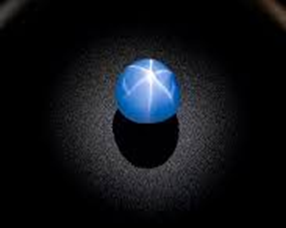
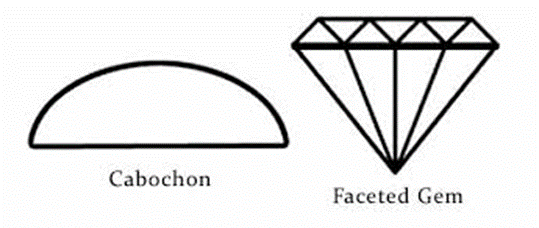
It is cut en cabochon, a method of cutting gemstones that results in a convex, rounded surface that is polished, but unfaceted. Opaque, asteriated, iridescent, opalescent, or chatoyant stones are usually cut en cabochon. The back of a normal cabochon-cut stone is flat, but it may be hollowed to lighten the colour.
The Logan Sapphire
The Logan Sapphire is a 422.98-carat (84.596 g) sapphire, also from Sri Lanka. It is one of the largest blue faceted sapphires in the world, currently displayed at the Smithsonian Institution. It was owned by Sir Victor Sassoon and then purchased by M. Robert Guggenheim as a gift for his wife, Rebecca Pollard Guggenheim. The sapphire’s name is derived from Rebecca’s new surname after marrying John A. Logan. According to the Smithsonian Institution, the Sassoons may have acquired the sapphire from an Indian maharaja.
The Logan Sapphire is a mixed cushion-cut sapphire, approximately the size of a large chicken egg, and set in a silver and gold brooch surrounded by 20 round brilliant-cut diamonds. Rutile inclusions, commonly found inside Sri Lankan sapphires, are visible inside the gemstone.
The Stuart Sapphire
A 104 carat stone set in the Imperial State Crown of the United Kingdom, part of the British Crown Jewels. It’s history is inconclusive, however it appears in and out of British royalty since the 17th century. The origin of the gemstone is likely Asia, either Afghanistan, Sri Lanka, Myanmar or Kashmir. The Stuart Sapphire is oval-shaped, about 1.5 in (3.8 cm) long and 1.0 in (2.5 cm) wide. It has one or two blemishes and at some point a hole was drilled at one end, probably to introduce an attachment for the stone to be worn as a pendant. On the back is a miniature plaque engraved with a short history of the Imperial State Crown

